
.png)
.jpg)
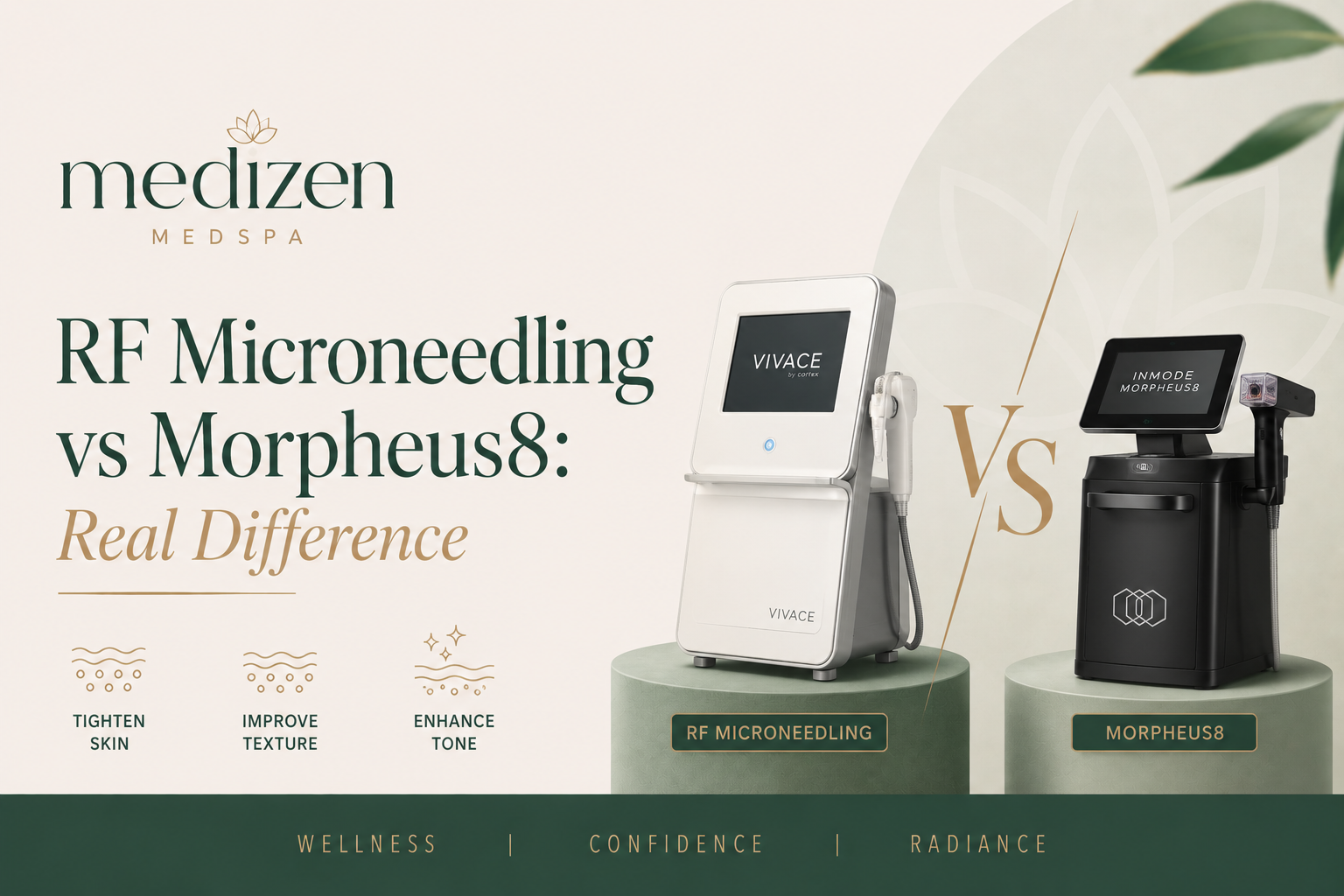
RF Microneedling vs Morpheus8: Real Difference
RF microneedling and Morpheus8 both stimulate collagen, but they're not interchangeable. How Potenza compares to Morpheus8 for skin tightening from Medizen.
Walk into any medspa marketing pitch and you'll hear two names repeatedly: Morpheus8 and Potenza RF microneedling. Patients ask us about them almost daily. Both deliver radiofrequency energy through microneedles to stimulate collagen and tighten skin. So which one is actually better?
At Medizen Medspa, we use Potenza. Here's the honest comparison, including where Morpheus8 has the edge and where Potenza pulls ahead.
Both are RF microneedling, so what's the difference?
Both devices use the same core mechanism: tiny insulated needles deliver controlled radiofrequency energy at a precise depth in the dermis. The micro-injuries plus heat trigger your body's collagen and elastin remodeling response, gradually tightening and refining the skin over the following weeks.
The differences come down to engineering: how the energy is delivered, the depth range, the needle design, and the supporting modalities each device includes.
Potenza overview (what Medizen uses)
Potenza is a fourth-generation RF microneedling device from Cynosure. Its standout feature is four RF modes in one device:
- 1 MHz monopolar: deep penetration for skin laxity and body tightening
- 2 MHz monopolar: precise mid-depth treatment for facial tightening
- 1 MHz bipolar: shallower treatment for fine lines and surface texture
- 2 MHz bipolar: focused, targeted bipolar for sensitive areas
Translation: we can tailor energy depth, frequency, and pattern to your exact concern within a single session. Skin laxity needs different settings than acne scars, which need different settings than enlarged pores.
Potenza also pairs with a FusionTip serum infusion that drives growth factor or vitamin serums into the skin during treatment, amplifying results.
Morpheus8 overview
Morpheus8 is from InMode, made famous in part by celebrity endorsements (Kim Kardashian, Judy Greer, Amanda Holden). It's a bipolar RF microneedling device with a focus on deeper subdermal remodeling, with treatment depths up to 4 to 8 mm depending on the tip.
Morpheus8 is well known for its Burst tip that delivers multiple energy depths in one needle pass, and for Morpheus8 Body, which extends the platform to torso and limbs for subcutaneous tightening.
Treatment depth comparison
Both devices reach similar depths in practice. Morpheus8 can technically reach deeper subcutaneous tissue with body tips (up to 8 mm), useful for things like abdominal laxity. Potenza covers most facial and neck depths and can address body laxity at slightly shallower depths through its monopolar modes.
For most facial treatments (skin tightening, scarring, pore refinement, fine lines), the practical depth difference is minimal. For body contouring tightening, Morpheus8 Body has a small edge on raw depth.
Pain, downtime, and sessions
Pain
Both treatments use topical numbing cream applied 30 to 45 minutes before. Patient comfort is similar. Some patients report Potenza feels slightly less intense due to the FusionTip cooling option and the bipolar modes for sensitive areas.
Downtime
Both produce mild redness and pinpoint spots for 24 to 72 hours, similar to a sunburn. Most patients return to work the next day with makeup. Avoid heavy workouts and active skincare (retinoids, AHAs) for 5 to 7 days.
Number of sessions
Both require typically 3 to 4 sessions spaced 4 to 6 weeks apart for optimal results. Maintenance sessions every 6 to 12 months keep results going.
Which device is better for...
Skin tightening (face)
Tie. Both deliver excellent facial tightening. Potenza's flexibility lets us match exact depth to your specific area of concern.
Acne scars
Slight edge to Potenza. The 2 MHz monopolar mode targets dermal scarring with precision, and the FusionTip serum infusion can drive in growth factors that accelerate healing.
Enlarged pores and texture
Tie. Either device produces strong results for pore size and surface texture.
Body tightening (abdomen, arms, thighs)
Slight edge to Morpheus8 Body for raw depth on heavier laxity. Potenza handles moderate body laxity well.
Sensitive skin or first-time RF patients
Edge to Potenza. The bipolar mode at shallower depths gives a gentler initial treatment, and the cooling reduces sensation.
Combination with serums or growth factors
Clear edge to Potenza. The FusionTip is a unique feature for transdermal delivery of bioactive ingredients during treatment.
Why Medizen chose Potenza
When our medical team evaluated platforms, we wanted versatility. A device that does one thing extremely well is useful, but a device that adapts to a wide range of concerns in one session is better for the kind of personalized treatment our patients want.
Potenza's four RF modes mean we can address facial tightening, acne scarring, pore refinement, and texture issues without switching platforms. Combined with the FusionTip serum infusion, it gives us a treatment plan that compounds results.
Is Morpheus8 a bad choice?
No, and we'll say so plainly. Morpheus8 is a strong platform, and if you've been treated by a skilled provider on Morpheus8 and gotten good results, there's no reason to switch. The difference between the two devices is smaller than the difference between a great provider and a mediocre one on either device. Provider skill is the single biggest variable in your outcome.
Book a consultation
If you're not sure whether RF microneedling is right for you, or you want to compare options against alternatives like the Titanium Facelift or laser resurfacing, that's exactly what a consultation is for.
Book a Potenza RF microneedling consultation at our San Diego or San Antonio clinic.